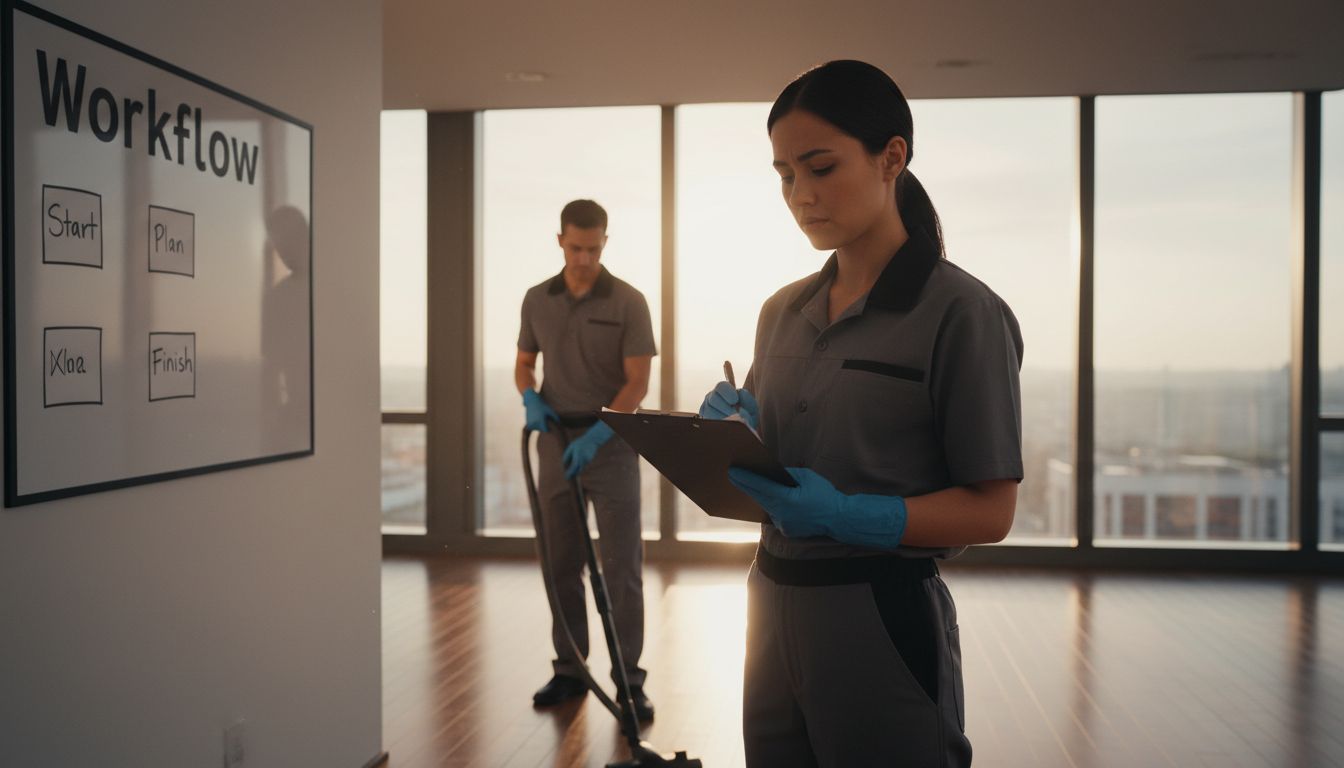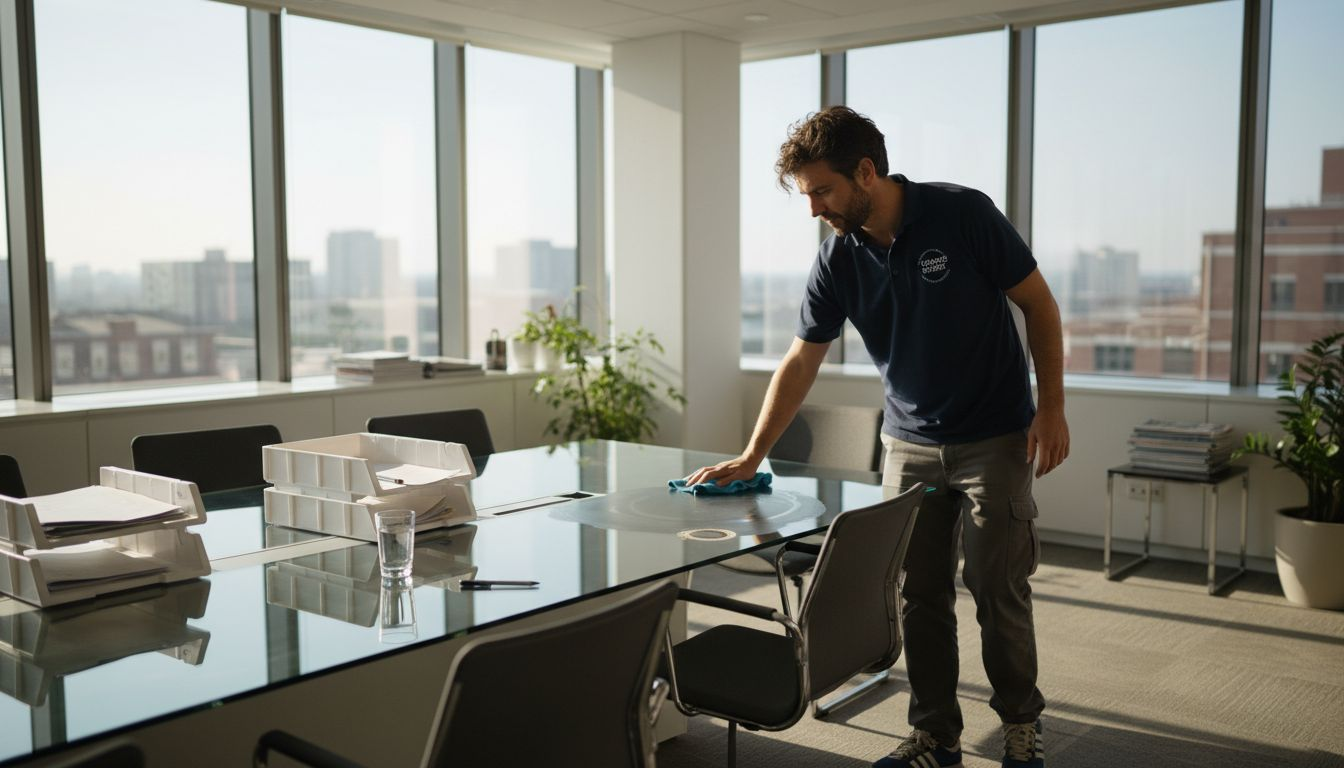
Most british office managers know that a spotless workspace is not just about looks it directly influences health, morale, and client trust. Research shows that regular professional cleaning can reduce workplace illness by up to 30 percent. With London’s commercial spaces under constant scrutiny, adopting robust cleaning solutions is vital for maintaining a professional environment and staying compliant. This guide walks you through practical strategies to keep every area clean and hygienic, making your business shine in every detail.
Table of Contents
- Step 1: Assess Workspace Needs And Gather Supplies
- Step 2: Declutter Surfaces And Organise Materials
- Step 3: Dust And Disinfect High-Touch Areas
- Step 4: Vacuum And Mop Floors Thoroughly
- Step 5: Review Results For Spotless Presentation
Quick Summary
| Key Point | Explanation |
|---|---|
| 1. Assess workspace needs thoroughly | Evaluating surface types and identifying high-touch points ensures proper cleaning supplies are gathered for an effective cleaning process. |
| 2. Implement a systematic decluttering approach | Create a more productive workspace by regularly removing unnecessary items and categorising documents to enhance accessibility and organisation. |
| 3. Focus on disinfecting high-touch areas | Regularly clean surfaces like doorknobs and keyboards to prevent the spread of germs and maintain workplace hygiene. |
| 4. Employ proper vacuuming and mopping techniques | Use appropriate methods and cleaning solutions for different floor types to maintain a clean, professional appearance throughout the office. |
| 5. Conduct a thorough final inspection | Check all cleaned areas for missed spots and ensure each surface meets hygiene standards before concluding the cleaning process. |
Step 1: Assess workspace needs and gather supplies
Preparing to clean an office requires a strategic approach that goes beyond simply grabbing a cloth and hoping for the best. Your initial task involves carefully evaluating the workspace and collecting the right tools to ensure a thorough cleaning process. Offices present unique challenges with multiple surfaces, electronics, and high-traffic areas that demand specific cleaning techniques.
Start by conducting a comprehensive workspace assessment. Walk through the entire office, noting different surface types such as wooden desks, glass partitions, computer equipment, and flooring materials. Detailed preparation can significantly streamline your cleaning process by helping you select appropriate cleaning supplies for each specific surface. Make a list of key areas that require attention: workstations, conference rooms, reception areas, kitchen spaces, and communal zones. Identify high-touch points like doorknobs, light switches, keyboard surfaces, and shared equipment that will need extra sanitisation.
Next, gather your cleaning supplies strategically. You will need microfibre cloths for delicate surfaces, multi-surface cleaning solutions, disinfectant wipes, glass cleaners, trash bags, protective gloves, and specialised electronics cleaning products. Consider the size of your office and ensure you have sufficient quantities of each item. Invest in quality microfibre cloths that can trap dust and bacteria effectively without leaving residue, and select cleaning solutions compatible with various office surface materials.
Here is a summary of suitable cleaning solutions for common office surfaces:
| Surface Type | Recommended Cleaner | Special Considerations |
|---|---|---|
| Glass partitions | Ammonia-free glass cleaner | Avoid streaks with microfibre cloth |
| Wooden desks | pH-neutral wood spray | Do not oversaturate surface |
| Computer equipment | Alcohol-based disinfectant | Ensure safe for electronics |
| Ceramic tiles | Low-foam floor cleaner | Rinse mop frequently |
| Carpeted flooring | Carpet shampoo solution | Use with carpet extractor |
Pro tip: Keep a dedicated cleaning caddy or portable storage container to organise and transport your supplies efficiently, reducing time spent searching for different cleaning tools.
Step 2: Declutter surfaces and organise materials
Decluttering your office space is more than just a visual upgrade it is a fundamental strategy for improving workplace productivity and efficiency. This step involves systematically clearing and organising workspaces to create a more streamlined and professional environment.
Begin by implementing a comprehensive decluttering approach that tackles surfaces methodically. Start with individual workstations, removing unnecessary papers, outdated documents, and random items that accumulate over time. Apply the one touch rule where you handle each item only once deciding immediately whether to file, bin, or relocate it. Sort documents into clear categories: urgent, reference, archive, and discard. Use sturdy filing systems with clearly labelled folders to ensure important documents are easily accessible yet neatly stored.

Next, focus on shared spaces like conference rooms and common areas. Invest in storage solutions such as drawer organisers, desktop trays, and wall mounted shelving to maximise vertical space and reduce surface clutter. Encourage a clean desk policy where employees clear their workspaces at the end of each day, storing personal items in designated drawers and keeping only essential work materials visible. This approach not only improves aesthetic appeal but also supports better hygiene and reduces potential distractions.
Pro tip: Schedule a monthly 15-minute decluttering session with your team to maintain an organised workspace and prevent unnecessary accumulation of materials.
The following table outlines the workplace benefits of an organised, decluttered office:
| Benefit | Impact on Employees | Impact on Organisation |
|---|---|---|
| Fewer distractions | Improves focus | Enhances overall productivity |
| Quicker item retrieval | Saves daily work time | Reduces wasted resources |
| Better hygiene | Reduces illness transmission | Lowers absenteeism rates |
| More professional look | Boosts team morale | Improves client impressions |
Step 3: Dust and disinfect high-touch areas
Maintaining a hygienic office environment requires focused attention on surfaces that encounter frequent human contact. High-touch areas are essentially germ magnets that can rapidly spread infections if not properly cleaned and disinfected.
Comprehensive cleaning protocols for office spaces emphasise systematically addressing surfaces that receive constant human interaction. Begin by identifying critical touchpoints such as doorknobs, light switches, keyboard surfaces, telephone handsets, mouse devices, shared equipment, printer controls, lift buttons, and communal coffee machine handles. Use disposable disinfectant wipes or microfibre cloths with EPA-approved sanitising solutions to thoroughly clean these surfaces. Ensure you follow a consistent pattern starting from cleaner areas and moving towards potentially more contaminated zones to prevent cross-contamination.
Implement a strategic disinfection routine that goes beyond superficial cleaning. Use alcohol-based disinfectants with at least 70% alcohol content for electronic equipment and specialised cleaning solutions for different surface materials. Pay particular attention to shared workstations and collaborative spaces where multiple employees interact throughout the day. Create a cleaning schedule that assigns specific responsibilities and ensures no high-touch area is overlooked. Consider using colour-coded cleaning cloths to prevent cross-contamination between different office zones and maintain a systematic approach to hygiene management.
Pro tip: Keep a small spray bottle with disinfectant and disposable wipes in easily accessible locations to encourage quick spot cleaning between scheduled deep sanitisation sessions.
Step 4: Vacuum and mop floors thoroughly
Thorough floor cleaning forms the foundation of a pristine office environment, transforming the entire workspace from merely tidy to professionally immaculate. This critical step requires systematic attention to different floor surfaces and their unique cleaning requirements.
Begin by preparing comprehensive floor cleaning strategies that address various floor types within your workspace. Different materials demand specific approaches carpeted areas require thorough vacuuming with commercial grade equipment, while hard surfaces like timber, vinyl, and ceramic tiles need targeted mopping techniques. Start by removing loose debris using a powerful vacuum cleaner with multiple attachments, paying special attention to corners, edges, and areas underneath furniture. Use overlapping vacuum strokes to ensure complete dirt removal, focusing extra time on high traffic zones that accumulate more dust and grime.
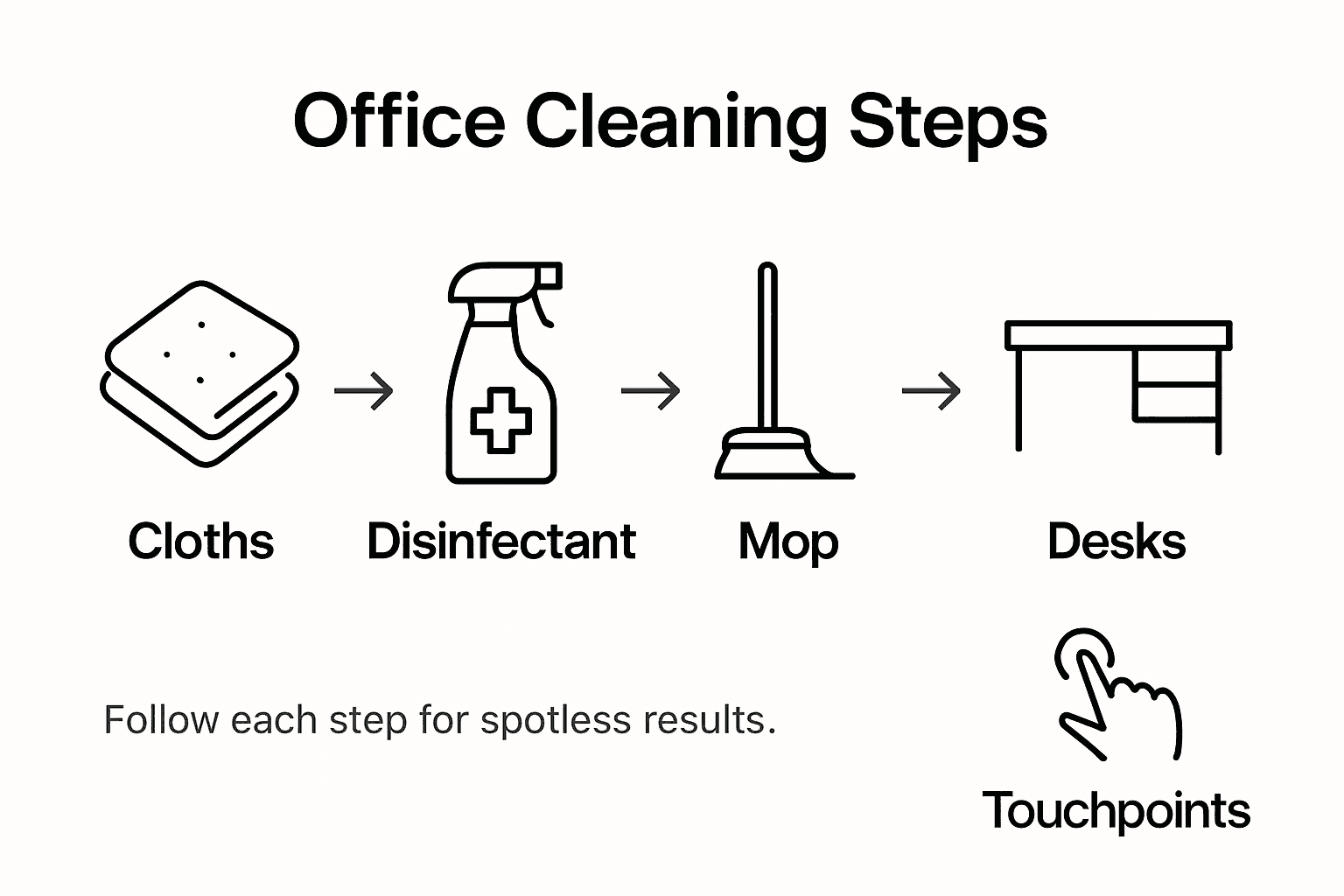
Transition to mopping by selecting appropriate cleaning solutions for your specific floor surfaces. Hard floors should be cleaned using microfibre mops that minimise water usage and prevent potential water damage. Work systematically from the furthest corner of the room towards the exit, using smooth figure eight motions to effectively capture dirt and prevent streaking. Rinse mop heads frequently and change cleaning solutions to maintain hygiene standards. For carpeted areas, consider periodic deep cleaning with specialised equipment to remove embedded dirt and refresh textile fibres, ensuring a consistently professional appearance.
Pro tip: Invest in machine washable microfibre mop heads and rotate them regularly to maintain optimal cleaning performance and prevent cross-contamination between different office areas.
Step 5: Review results for spotless presentation
The final stage of office cleaning transforms meticulous work into a professional, polished environment. This crucial review process ensures every cleaned surface meets the highest standards of hygiene and aesthetic appeal.
Perform a comprehensive visual and tactile inspection of the entire workspace, systematically moving through each area to confirm thorough cleaning. Check surfaces for any missed spots, streaks, or residual dust. Pay particular attention to previously identified high-touch areas, verifying that disinfection has been complete. Implement a structured walkthrough method where you examine each zone methodically start from the furthest point of the room and work towards the exit. Use natural lighting to help identify any overlooked dust or cleaning marks on surfaces like glass partitions, wooden furniture, and electronic equipment.
Engage your sense of smell and touch to validate cleaning quality. Surfaces should feel smooth and clean without any sticky residue or chemical odours. Check that cleaning materials have been properly stored, cleaning equipment is clean and ready for the next use, and all waste has been appropriately disposed of. Take a moment to step back and view the entire workspace holistically, ensuring a consistent level of cleanliness across different areas. Consider taking before and after photographs to document the transformation and maintain accountability for cleaning standards.
Pro tip: Develop a quick one-page checklist that you can rapidly complete during your final inspection to ensure no cleaning aspect is accidentally overlooked.
Elevate Your Office Cleanliness with Expert Support from HARC Solutions
Maintaining a pristine workplace demands more than routine tidying it requires expert knowledge in tailored cleaning strategies that address high-touch points, surface-specific treatments, and efficient organisation techniques. If you find assessing workspace needs, decluttering systematically, or disinfecting high-traffic areas challenging, HARC Solutions offers specialised commercial office cleaning services designed to transform your environment into a spotless, safe, and professional space.
Trust our trained and insured team to handle every detail with care and precision so you can enjoy a hygienic office that boosts productivity and reflects your company’s standards. Act now to schedule a consultation or book your tailored cleaning service through HARC Solutions. Explore how we help property managers, landlords, and businesses maintain immaculate communal and work areas by visiting our commercial cleaning services page. Don’t let office cleaning become a hassle – experience the satisfaction guarantee and superior quality that makes us a trusted local leader in professional cleaning.
Frequently Asked Questions
What are the steps to assess workspace needs for office cleaning?
Begin by conducting a comprehensive workspace assessment, noting the different surface types such as wooden desks and electronic equipment. Identify high-touch points and list areas requiring attention, including workstations, conference rooms, and communal spaces.
How do I decide on the right cleaning supplies for my office?
Select cleaning supplies by evaluating the surface materials in your office. Gather microfibre cloths, multi-surface cleaning solutions, disinfecting wipes, and specialised electronics cleaners based on these surface types to ensure effective cleaning.
What areas should I focus on when decluttering office spaces?
Focus on individual workstations and communal areas by removing unnecessary items and sorting documents into clear categories. Systematically clear work surfaces and encourage a clean desk policy to maintain a tidy environment.
How can I effectively clean high-touch areas in the office?
Clean high-touch areas, such as doorknobs and keyboards, using disposable disinfectant wipes or microfibre cloths with EPA-approved sanitising solutions. Implement a regular disinfection routine to ensure these areas are cleaned effectively and consistently.
What is the best way to clean office floors thoroughly?
Begin by vacuuming carpeted areas with a commercial-grade vacuum cleaner, then mop hard surfaces using appropriate cleaning solutions. Ensure to rinse mop heads frequently and work systematically from the furthest corner towards the exit to ensure optimal cleaning results.
How do I evaluate the cleanliness of my office after cleaning?
Perform a visual and tactile inspection of each area, checking for missed spots or residues. Use natural lighting to identify any overlooked areas and ensure all cleaning supplies are stored correctly to maintain a pristine appearance.